

Mountain
Safety
Five days of off-piste awareness, avalanche hazard assessment, route selection and emergency management. The essential module for any instructor working beyond the piste boundary.
Select a Course
Know the
Mountain.
The Mountain Safety module equips instructors to manage groups competently and responsibly in off-piste and uncontrolled mountain terrain. The Caucasus Mountains that surround Gudauri are a genuine high-alpine environment — the Mountain Safety module is built for exactly this kind of terrain.
Over five days, candidates develop practical knowledge and skills in avalanche awareness, terrain assessment, route selection for groups, emergency response, and the professional decision-making framework that governs whether and how to take clients into the mountain.
This is not an avalanche guide course — it develops awareness-level competency for ski instructors, not mountain guides. But the standard is rigorous: on completion, instructors have the knowledge, judgment, and safety protocols to lead small groups in appropriate off-piste terrain with confidence and professional responsibility.
Safety equipment required: Avalanche transceiver, probe, and shovel are mandatory for this module. Rental available in Gudauri if you don't own your own. Ask us when you enquire.
Where You'll
Train
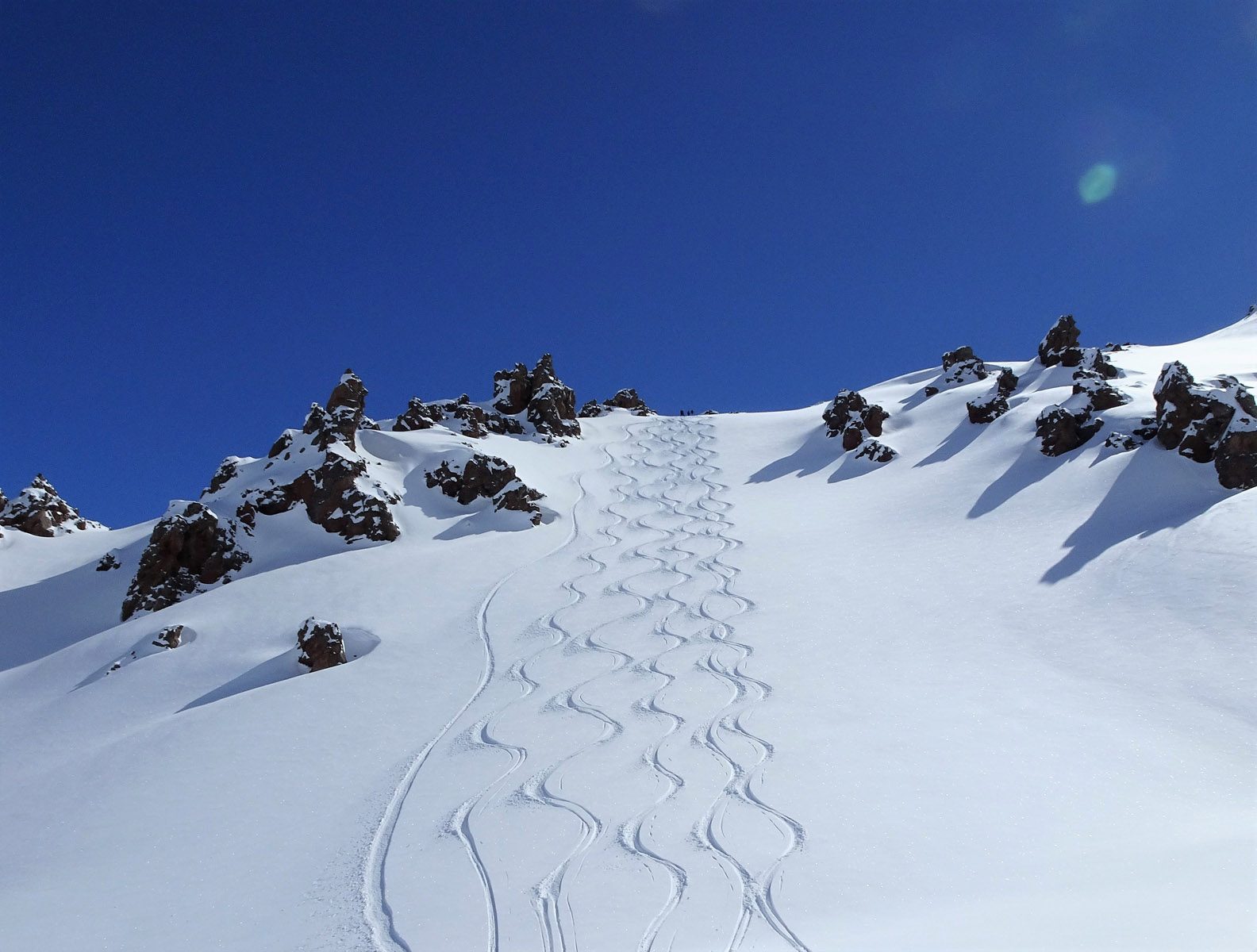
Georgia's largest ski resort, high in the Greater Caucasus. Wide, treeless slopes and big open bowls give you every kind of terrain you need to train and be assessed — all in one place.
- Lifts up to 3,279 m on Mt. Sadzele
- 75–80 km of groomed runs — the longest over 7 km
- Open off-piste terrain right beside the pistes
What You Need
-
BASI Level 2 or EquivalentYou need a current BASI Level 2 ski instructor qualification. Transfer is possible for instructors holding an equivalent Level 2 qualification from another snowsport association — contact us and we will confirm your eligibility.
-
Active BASI Membership & LicenceBoth must be current. Bring membership number and confirm licence is active.
-
Confident Off-Piste SkierThe course takes place in off-piste terrain. You must be able to ski off-piste competently and safely — variable snow, ungroomed slopes, and uneven ground. Prior off-piste experience is strongly recommended.
-
Physical Fitness for Alpine TerrainOff-piste days involve skinning, traversing, and variable snow — more physically demanding than piste skiing. Arrive in strong condition.
-
Avalanche Safety EquipmentAvalanche transceiver (beacon), probe, and shovel are mandatory on all off-piste days. Rental available in Gudauri. You must know how to use your transceiver before Day 1.
-
Travel & Ski Insurance Including Off-PistePolicy must explicitly cover off-piste skiing and professional instructor training with medical evacuation. Many standard policies exclude off-piste — check carefully.
-
Valid Outdoor First Aid CertificateCurrent 2-day minimum OFA — particularly relevant for this module. Must not have expired.
How You're Assessed
01 — Practical Mountain Assessment
Candidates demonstrate terrain assessment and route selection in real off-piste conditions. Assessed on: correct identification of hazards, slope angle and aspect analysis, accurate reading of the day's avalanche bulletin, appropriate route selection for a hypothetical client group, and group management protocols across the assessed terrain.
The standard requires professional judgment — not textbook answers. Assessors look for candidates who reason correctly from the available information, not those who have memorised a checklist.
02 — Emergency Scenario & Theory
A defined emergency scenario (avalanche burial, injured group member, or lost party member) is presented. Candidates must manage the response from initial assessment through to rescue service contact and group stabilisation. Response must be calm, prioritised correctly, and communicated clearly to the group.
Written theory element covers: snow science fundamentals, avalanche danger scale, decision-making frameworks, and emergency protocols. Closed-book, typically 30–45 minutes.
Pass Criteria
Both practical and theory components must be passed independently. Competency in all safety-critical areas is required — partial knowledge is not sufficient. The standard reflects real professional responsibility: in the mountain environment, gaps in safety knowledge have consequences.
Result & Feedback
Results communicated on Day 5. Written feedback on practical performance and theory results. Feedback includes specific recommendations for continued development — particularly for candidates who are close to the pass boundary in any component.